

Whether we realize it or not, the smells we smell affect our decisions. What we eat, where we shop, where we go on vacation—all these decisions can be influenced by our noses. Even how we feel about our last visit to the doctor! Scent in healthcare may make a larger impact on patient and employee satisfaction than you realize.
As a result, an increasing number of businesses—especially those in the healthcare industry—rely on scent marketing to enhance the patient experience. Through scientific studies and years of real-world experience, the healthcare industry has learned that olfactory branding can have a significant effect not only on patients but also on those who spend the most time in these offices: doctors, nurses, and staff.
To enhance the atmosphere for everyone, healthcare facilities turn to scent branding. When released in measured and consistent bursts from a fragrance diffuser, smells like lavender and peppermint can help ease tension and reduce anxiety, offering benefits for everyone in the building.
The Science Behind Scent and Human Behavior
Since the start of human civilization, we’ve been fascinated with scents, exploring their influence on our mental, physical, and spiritual well-being. Scent marketing isn’t a new idea. It draws inspiration from aromatherapy—a natural, scent-based method of healing that has been used for millennia.
According to the National Institutes for Health, “Many ancient civilizations, including Egypt, China, and India, have used aromatherapy as a popular complementary and alternative therapy for thousands of years. In traditional medicine, as well as in aromatherapy and herbal medicine, essential oils and fragrance compounds have been used for the treatment of various psychological and physical disorders such as headaches, pain, insomnia, eczema, stress-induced anxiety, depression, and digestive problems.” [SOURCE]
By measuring these known phenomena with scientific rigor, we’ve been able to better identify and quantify the effects of scent on the human body. A key part of these studies has been researching how our bodies process the thousands of scents we smell every day.
The Olfactory Process
Scientists believe that our sense of smell was the first sense to develop. For early humans, it was even more important than sight, as it helped alert them to danger and led them to food and water. In a broader sense, for all animals, the olfactory system helps identify predators, potential mates, and meals, among other things. In a very real sense, our sense of smell is a crucial part of how we experience the world around us.
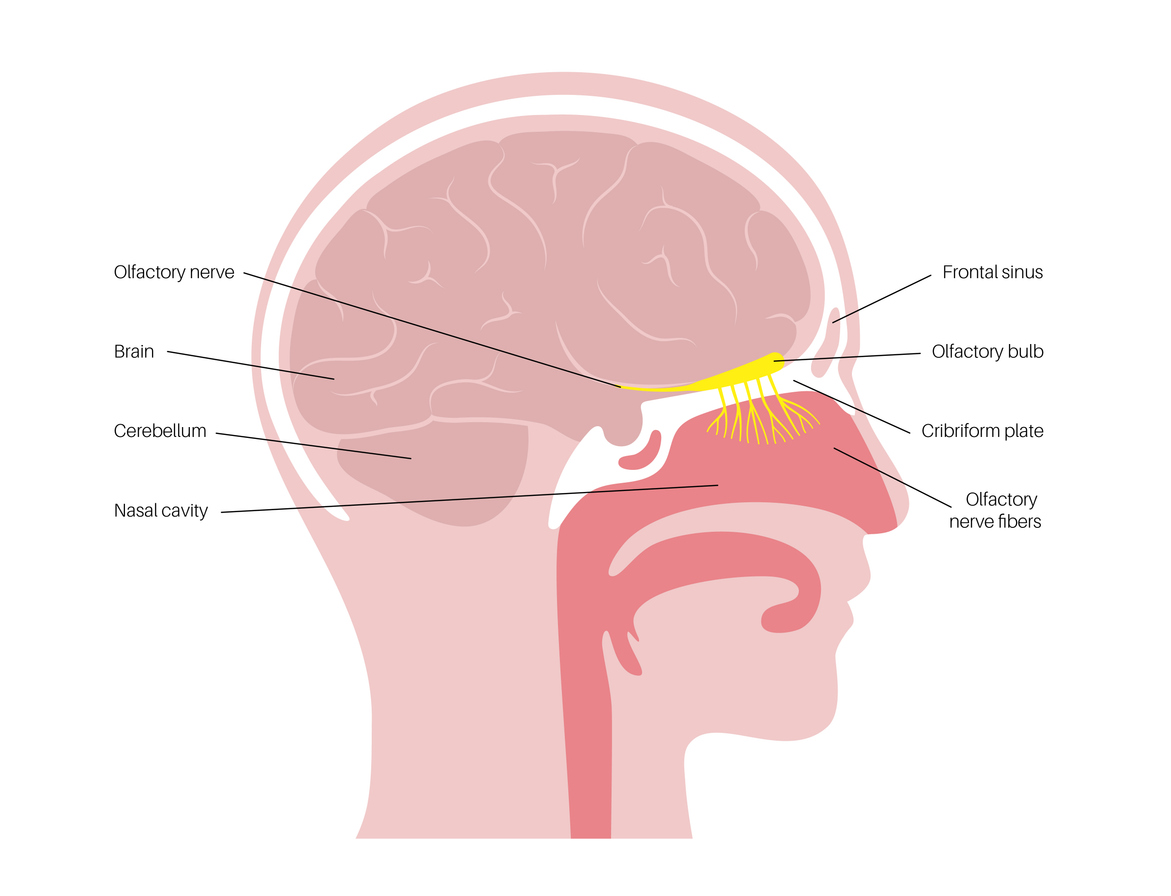
Studies have shown that smells can significantly impact our moods and decisions. Sometimes, breathing in a scent triggers a “time travel” phenomenon that takes the person inhaling the scent back in time to an early memory of the same scent. But why do some of the scents we smell every day have powerful effects like this…while others travel in and out of our noses with little notice?
To solve this mystery, we turn to science for a deeper explanation of what’s happening as we inhale. According to the National Library for Medicine:
“In the olfactory process, the fragrant molecules in the air attach to the cilia of olfactory receptors in the olfactory epithelium, located in the nasal cavity. [Receptors] are activated and electrical signals are generated…[and] transmitted to the brain by olfactory sensory neurons via olfactory bulb and higher olfactory cortex,…[where they] modulate the brain functions including memory, thoughts, and emotions.” [SOURCE]

The diagram above provides technical details that illustrate the process we perform naturally, thousands of times a day. The smells that trigger a response in us—a feeling, a memory, a reaction—are ones that our brain recognizes from experience. When our olfactory receptors find a match to a smell we know, THAT’S when the magic happens!
How Scent Marketing Impacts Patient Behavior
This analysis begs the question: How can scent marketing be used to help patients feel better about their health-related appointments? The answer is: by using specific scents to get a desired outcome. For example:
Anxiety Reduction
in waiting areas and MRI rooms, try soothing scents like citrus, vanilla, and lavender.
Mood Enhancement
in any area of the building, deploy fragrances like orange and lavender.
Pain Perception
In pediatric units and recovery areas, try using warm amber and floral scents to comfort patients.
Cognitive Function
like concentration and clarity, can be aided by scents like rosemary or lemon. These aromas are ideal for assisted living facilities or cognitive therapy units.
Memory and Nostalgia
are important, especially for Parkinson’s, Alzheimer’s, and dementia patients. Tap into scent’s ability to unlock memories with fragrances like vanilla, baking cookies, and cinnamon.
Relaxation and Restfulness
in overnight care areas or rehabilitation facilities where patients stay for weeks, try chamomile and sandalwood.
Stimulation and Alertness
can be helpful, such as in physical and occupational therapy, by employing invigorating aromas like cinnamon or peppermint. [SOURCE]
Boosting Staff Morale and Reducing Burnout
The benefits of scent marketing go beyond just patients, extending to employee wellness. A pleasantly scented atmosphere can help with healthcare staff burnout. Strategically using fragrances can help employees feel better about coming to work, and feel better while they’re at work.
Stress Reduction
Stress in healthcare facilities is real, and often intense. Diffusing calming scents, such as sandalwood or lavender or jasmine, can help.
Increased Work Performance
For roles where tedious tasks are the norm, fragrances like mint can help stimulate clear thinking. Rosemary and lemon, too.
Creativity and Collaboration
Bergamot and lemongrass are examples of aromas that can be used in meeting rooms to spur creativity and collaboration.
Employee Retention and Satisfaction
How content workers are at their jobs has a direct effect on morale. Providing a welcoming, comfortable ambience through scent helps staff feel happier and more comfortable at work.
Find out more about Scent Marketing for Employee Wellness.
Implementing a Scent Strategy in Healthcare Settings
Here are elements to consider as you lean into scent marketing:
- Target Areas: Areas of high use have a greater need for scent, making it important to focus on areas like lobbies, waiting rooms, hallways, and break rooms.
- Scent Selection: Prefer pleasant, positive scents with real benefits, such as lavender, eucalyptus, and citrus.
- Delivery Methods: Discrete, stand-alone fragrance diffusers work well for smaller spaces, while HVAC-powered scent systems are ideal for large facilities seeking even distribution.
- Safety Compliance: Because healthcare is focused on health, it’s critical to make sure the scents you use are safe.
Why Aire-Master is the Trusted Partner for Healthcare Facilities
 Since 1958, Aire-Master has been helping healthcare facilities and other businesses create a better-smelling work environment. Having a scent-providing partner with Aire-Master’s expertise makes olfactory marketing easier. All of our scents are hypoallergenic and safe for medical environments, including doctors’ offices, dental offices, and assisted living homes.
Aire-Master advantages:
- Tailored Scent Profiles: We can customize your scent to support your business’s goals and patient type.
- Enhanced Scent Delivery: From simple scent bars to discrete fragrance diffusers to large-scale HVAC scenting, we do it all.
- Odor Control + Wellness: Our dual strategy is ideal for healthcare environments. We can recommend and provide scents that eliminate odor while improving wellness.
- Service & Support: We specialize in making scent marketing hassle-free. We take care of refills, maintenance, and more—so you don’t have to.
Contact Aire-Master today and let’s work together to come up with a scent strategy to boost YOUR healthcare business!