

Businesses dabbling with the idea of scent marketing can learn a great deal from industries that have been employing it successfully for years. One of those fields is healthcare.
Scent marketing for healthcare facilities makes for a powerful partnership. That’s because doctors’ offices, emergency rooms, and outpatient surgery centers all share a common goal—to improve patient care and comfort.
Olfactory marketing can help in a number of ways
- A calming scent added to the air at the doctor’s office can help soothe feelings of worry and nervousness, making patients feel more comfortable
- A clean scent—especially in restrooms and surgical areas—reinforces a sanitary impression by neutralizing unwanted odors
- A pleasant scent helps make a positive impression, making it more likely that patients will feel good about coming to their next visit
Scent marketing has advantages for employees and visitors, too! Let’s explore the benefits.
Why Scent Matters in Healthcare Environments

The science behind scent marketing is fascinating. As we inhale, our body processes the molecules in the air, passing them across the olfactory nerve so it can try to find a match…and recognize a smell. When it does, that info speeds right to our brain’s limbic system—the area that controls mood, memory, and emotion.
That’s why many of the emotions we feel in a day are directly affected by what we smell, both positively and negatively. In everyday life, our nose leads us toward pleasant smells…but it also steers us away from unpleasant ones. And our bodies have learned to pay attention to that, both consciously and subconsciously. The negative smells in a healthcare setting might include the aromas associated with urine, blood, body odor, or feces.
“If [a patient or visitor] walks in the front door and smells urine, that sets the tone for their experience. When you smell an odor, you start questioning everything else. It’s all about perception.”
—Doug Green, Regional Director of Environmental Services at Mercy Hospital in Springfield, Missouri
Ensuring that patients and visitors perceive their facility in a positive light is a key focus of healthcare settings. Long-term living facilities, medical centers, rehabilitation centers, and dentist’s/doctor’s offices have been employing scent marketing to enhance the ambience. The results have been overwhelmingly positive.
Odor Control + Ambient Scenting: A Dual Strategy
When patients think of healthcare facilities, chances are their associations are not rosy. In addition to their cost, unfamiliar layouts, and poor parking options, they tend to hold another memory for patients—bad smells.
One facet of scent marketing is ambient scenting, which helps ensure that lobbies, hallways, and common areas smell pleasant and clean. This kind of setup creates a welcoming and comforting ambiance throughout the building. However, even if a facility is clean and well-run, just one or two malodorous areas can create the impression in patients’ minds of a dirty, poorly run facility.
That’s where a dual strategy to scent marketing comes in. In addition to ambient scenting, healthcare facilities regularly take things up a notch by also employing odor control measures. Winning the war against unpleasant odors starts with knowing the best way to combat them.
Odor Elimination – Odors are caused by bacteria. By disinfecting the area to kill it, or by cleaning it to remove the source of the bacteria, the malodor should cease to cause trouble.
Scent Absorption – Absorbents are solid materials that can capture and hold odors. Substances like baking soda (which can be poured onto an odor source) and charcoal (which can be formed into an air filter) are good examples.
Odor Neutralization – The process of neutralizing odors involves trapping them and altering the molecules via a chemical process that renders them inoffensive. Troublesome, complex malodors like smoke respond particularly well to this tactic.
Scent Masking – More of a short-term fix than a long-term solution, masking an odor involves covering it up with a stronger odor. A blast from a can of air freshener or lighting an incense stick are common examples.
Neutralizing bad odors while amplifying good ones takes practice and precision. That’s why it’s important to work with a scent branding partner like Aire-Master, who can help find a balance between odor control and ambient scenting.
Safe and Effective Scent Delivery Systems
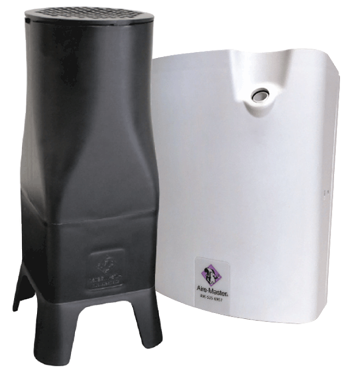
With all the scent-delivery systems available, how do you know what will work best for you? Scent marketing changes based on space; what works for a single doctor’s office won’t necessarily work for a multi-building hospital. That’s why you need a partner like Aire-Master.
We offer scent distribution options for small spaces (restrooms, short hallways, surgery prep rooms), medium spaces (lobbies, waiting rooms), and large spaces (conference facilities, hospital cafeterias, group gathering spaces).
Choosing the Right Scent Strategy for Your Facility
A one-scent-fits-all strategy may not work for every space in your healthcare facility. Different spaces benefit from different approaches. These examples show how understanding the nuances of scent marketing helps you adjust your strategy.
- Waiting Rooms: One of the most popular scents for these spaces is lavender, which is well-documented for its calming Other fragrances can help soothe patient nervousness, including chamomile, sandalwood, and eucalyptus.
- Medical Procedures: Patient anxiety is real, especially regarding procedures like MRIs, CT scans, and even having work done at the dentist. That’s why many diffuse citrus scents or vanilla, which promote calm feelings and reduce uneasiness
- Pediatric Wards: Children experience pain, just like the rest of us, but soothing it with medication can be tricky. Instead, some pediatric spaces are incorporating stimulating fragrances to reduce their perception of it.
- Assisted Living Facilities: Lavender is a popular choice at these homes, where they help residents to soothe stress, reduce anxiety, and improve well-being.
- Reminiscence Therapy: For people combating early memory loss from conditions like Parkinson’s, dementia, and others, this therapy offers a way to rediscover certain memories through scent.
Final Thoughts: Scenting That Makes a Difference
When it comes to scenting, healthcare facilities face serious challenges. Patients, visitors, and even employees often enter these places feeling anxious, nervous, and unwell. They may not expect the place to smell wonderful…but they DO expect it not to smell bad. And that’s what makes the healthcare sector a perfect place for scent marketing.
A thoughtfully planned scenting strategy executed professionally can help control odor while simultaneously improving patient care and comfort. Aire-Master has been helping businesses of all kinds—including doctors’ offices and hospitals—achieve a cleaner, more comfortable ambience since 1958.
Contact Aire-Master today and smell what scent branding can do for you!