

Smells. They’re everywhere, all the time. Despite this—or maybe because of it—their impact on our day-to-day lives is often overlooked. The science of scent seeks to understand and explain how smells work and how they influence our moods, memories, and behaviors. In this article, we explore scent science and the current state of scent technology, scent memory, and scent branding.
The Biological Process of Smelling

When it comes to scent, the nose knows—that’s where it all starts, anyway. But biologically, the science of how the brain processes smell is fascinatingly intricate. It’s believed that smell was the first of our senses to develop, a strong indicator of its importance. As scientists examine our sense of smell more closely, they are discovering that the human olfactory system is even more sophisticated than we knew.
According to the National Institutes of Health (NIH), a study from the 1920s reported that humans could identify 10,000 unique scents. The science of scent has come a long way in the past century—recent studies suggest it’s closer to 1 trillion! Translate that to the modern focus on branding primarily through sight, which allows humans to perceive about a million different colors, and the potential of scent branding becomes startlingly clear.
But how do our bodies turn the smells all around us into “actionable intelligence?” It begins with air being inhaled through the nose, carrying with it minuscule scent molecules—little bits of everything around us, really—that meander through the nasal cavity. There, the nasal conchae direct the air toward an area in the upper posterior called the olfactory epithelium. [SOURCE]
Though just a few centimeters wide, this area holds more than 100 million olfactory receptor cells that help our brains identify what we smell. And when we eat, mastication releases scents that also ascend to this area. Via the receptors there, odors are delivered quickly and directly through the olfactory nerve, an almost-instantaneous pathway to our olfactory bulbs.
Within the larger nerve center that is the brain, these bulbs serve as a kind of special headquarters for olfactory info. There, they filter the information to the limbic system, including the hippocampus and amygdala—the areas that focus on memory and emotion. [SOURCE]
The Science of Sense of Scent and Overall Health
Scents can be key indicators of overall health. For instance, when dogs do their business, they almost always stop to give it a quick sniff. There’s a good reason for that. The way something smells can offer a quick health assessment.
“It’s now clear that even though our sense of smell is not as robust as that of a mouse or bloodhound, it is deeply tied to our cognitive centers, our emotional centers, and our memory centers,” says Sandeep Robert Datta, a professor of neurobiology at Harvard Medical School. “We’re dependent on it for a sense of well-being and centeredness in the world.” [SOURCE]
Beyond scents themselves, there is our own sense of smell itself, which relies on a complex biological process of analysis. When the human body has trouble performing this process, problems can arise. For each of us, getting to the bottom of those issues can tell us a lot about our overall health.
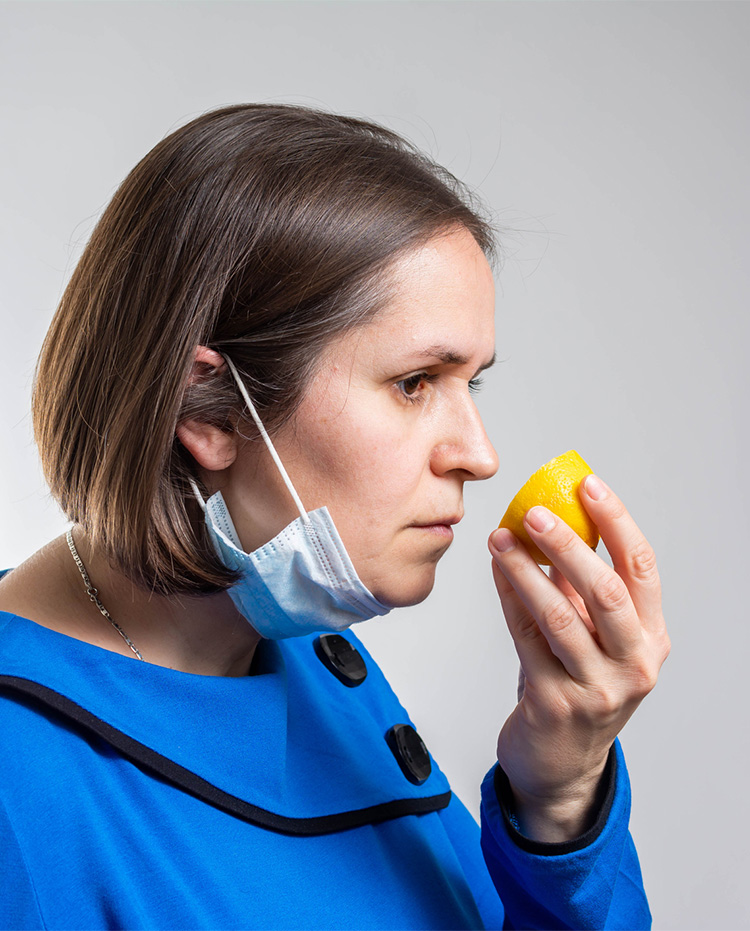
It’s not uncommon to have trouble smelling. According to the NIH, pre-COVID-19 studies showed that 12% of adults over 40 had smell dysfunction. The most common ones are:
- Hyposmia: reduced ability to perceive scents
- Anosmia: inability to detect odors
- Parosmia: distorted perception of smells
- Phantosmia: smelling a scent that is not present
[SOURCE]
When our brains fail to recognize and identify scents, it tends to be a sign of declining health. For Alzheimer’s and Parkinson’s diseases, smell dysfunction is one of the early warning signs. A study entitled “Olfactory Dysfunction Predicts 5-Year Mortality in Older Adults,” published by the NIH in 2014, analyzed data from more than 3,000 adults dwelling in communities in the US, all 57 years and older. The data showed that, compared to healthy peers, participants who had odor dysfunction were four times more likely to die within a five-year period [SOURCE].
Perhaps the most distinctive link between scent and human health is its power to evoke emotional reactions and trigger immersive memories. Studies show that, when spurred by scent, autobiographical memories are more often associated with intense emotion. Unique among the senses, our sense of smell has the ability to transport us, unlocking the door to a scent memory.
The Science of Scent and Memory
Our stored memories of scents are a critical part of odor recognition, allowing us to remember an odor and even have it transport us back in time to when we first smelled it. This powerful connection between scent and memory is essential to the human experience.
When the whiff of a particular odor seems to transport you to a place locked deep in your memory, it is sometimes called a Proustian moment. Marcel Proust, for whom it is named, was a French author famous for his musings on memory. Also called odor-evoked memories, these scent-spurred personal recollections are notably different from ones triggered by other senses.
Scientists are making strides in understanding these kinds of memories. They’ve documented that they tend to be more vivid than other memories because they are accessed less frequently and are more specific. They also tend to feel stronger, seeming to transport us to the moment we first experienced the smell. These “time travel” memories frequently take us to our early lives, evoking potent memories from childhood.
Brown University neuroscientist Rachel Herz studies the psychological science of scent. Her work focuses on the connection between scent and health. She says, “Smell can instantly trigger an emotional response along with a memory, and our emotional states have a very strong effect on our physical well-being.” [SOURCE]
Scent Branding
Thanks to careful research by scent scientists, the connections between scent, memory, mood, and health have never been more apparent. The corporate world has noticed that their potential to influence all sorts of decisions grows by the day.
A 2018 Harvard Business Review article put it this way: “In an age where it’s becoming more and more difficult to stand out in a crowded market, you must differentiate your brand emotionally and memorably,” they wrote. “Think about your brand in a new way by considering how scent can make a more powerful impression on your customers.” [SOURCE]
Companies that study scent technology and employ scent branding see their signature scent as an easily recognizable “olfactory logo.” Just like a visual logo, it sets the business apart and begins an association between the company and the scent in the customer’s mind.
In modern marketing, sensory branding is part of an overall strategy that creates brand loyalty in multiple ways through multiple senses. When the goal is brand recognition, choosing scent maximizes the impact by directly influencing mood and locking in memory.
Curious about Scent Branding?
Check out our blog to learn the ins and outs.
The Role of Scent in Emotional Connections
The connection between scent, memory, and mood is profound. The smell of baking cookies, the perfume worn by an old flame, the scent of sawdust—for many, powerful memories are triggered by scents like these. Part of the reason, scientists suggest, is the way our brains are structured.
In the anatomy of the human brain, our olfactory bulbs are at the bottom-front. There, they serve as the main gates through which scent info is processed. As scents are inhaled and analyzed, the information our brain picks up is passed into the limbic system, where it is interpreted and linked to scent memories and emotions.
While some smells seem fleeting, others unlock deeply held memories and generate dormant emotions. As our understanding of these connections grows, so does our ability to directly affect mood with scent. Companies looking to leverage scent memory and incorporate scent branding must understand how and why these connections are made.
In many ways, scent influences our daily lives. From the soap to the food we eat, our scent preferences are on display daily. Companies that understand this study scent technology and offer products that incorporate scent branding.

When you’re ready to upgrade your marketing game with the power of scent branding, Aire-Master can help.