
Large commercial spaces are tough to scent consistently. One of the reasons is that the design varies from one to the next. As a property manager, you might have two locations featuring about the same square footage…but with totally different layouts.
Example 1: A multi-story office building covers 30,000 square feet. But it’s divided into 3 floors and 30 different offices, all with doors to factor in. There are also large conference rooms and a big boardroom to account for.
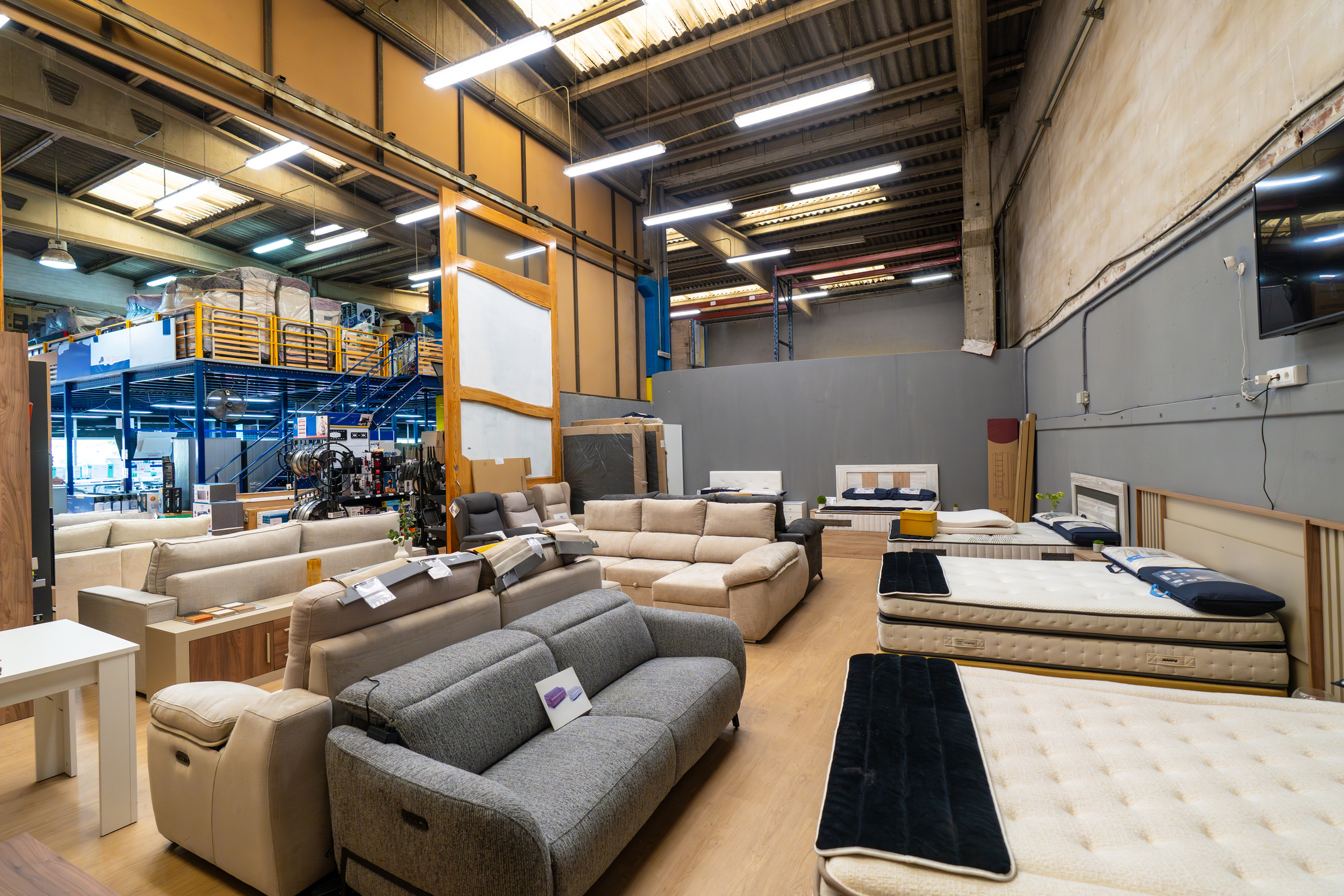
Example 2: A single-story, big-box store also covers about 30,000 square feet. It has high ceilings and fans to move air. Only a handful of rooms are closed off from the showroom floor, which accounts for most of the space.
Applying the same strategy to scenting these two properties won’t work. Due to their layouts, air will move differently through the two spaces. HVAC will play an important role, as will the number and location of entrances and exits.
It’s important to understand this at the outset: to effectively scent a large commercial space, you need a strategy that accounts for multiple factors, not simply a “total square footage” measurement.
Learn more about American National Standards Institute guidelines for indoor air quality.
Start with the Purpose of Your Scenting Program

Begin with the basics. Ask yourself, “What’s the purpose of my scenting efforts?”
Here are some questions to consider:
- Is your goal to freshen the space and help it smell better? Or something else?
- Are your efforts a reaction to customer complaints about lingering odors?
- Do you intend to use more than one scent? Or are you focused on a signature scent?
The answers to these questions will help set the framework for your scent marketing plan.
Common commercial scenting goals:
- Maintain freshness all day
- Create an attractive, welcoming setting
- Reinforce brand identity through a signature scent
- Formulate a “customer journey” with a different scent in each zone
- Address stinky areas
Each of these is a worthwhile goal that can be achieved through olfactory branding. If your goal is to “address stinky areas,” however, that’s what scent marketers would call “odor control.” While scent marketing seeks to enhance the customer experience via scent, odor control seeks to neutralize malodorous issues BEFORE scent marketing is deployed.
Learn why odor control is so important.
7 Factors That Determine Large-Space Scent Coverage
When it comes to commercial scent machines for big spaces, there is no one-size-fits-all device. To understand what your unique space needs, it’s important to assess these seven points.
Total Air Volume, Ceiling Height, and Layout
Air moves in three dimensions, which means you need to account for the volume of your building, not just its square footage. High ceilings magnify the issue, as do other factors.
Here’s a list of design features that make scenting commercial spaces more challenging:
- Stairs (especially open stairwells)
- High or vaulted ceilings
- Atriums and skylights
For commercial diffusers, bear in mind that the coverage number it advertises may not accurately reflect how well it will work in your space. Volume is key.
HVAC Zones and Air Movement
Scent is airborne. When air moves, it does, too. That means your HVAC system is a critical factor in how you’ll aromatize any large space.
Ask yourself these questions about your setup:
- Do I have a single HVAC system for the whole property, or several?
- If I have multiple zones, how are they divided?
- Where does air enter and exit each space? Is it only through vents and returns?
- Are there fans or exhaust systems in certain areas?
- What kind of on/off cycle is it on? Is it time- or temperature-based?
- Are there differences based on whether the system is heating versus cooling?
Depending on the answers, your HVAC system may be ideal for helping distribute aroma through the space. Learn more about how that works here.
Entrances, Exits, and Customer Traffic
Think about how many doors your building has. Are you counting special doors, like garage doors or automatic doors?
Every one of these affects airflow, pulling in hot air, cool air, stinky air…all working against what you’re trying to accomplish.
Customer traffic has an effect, too. People tend to bring their own heat and smells with them. And every time they come or go, a door opens or closes.
As you develop your scent marketing strategy, it’s important to account for these factors.
How Each Area Is Used
Your building likely has multiple rooms, each with a specific purpose (or two). Some may hold lots of equipment, while others hold lots of customers. As a result, the amount of fragrance each room needs may vary.
Consider how people use each space:
- On average, how much time do customers spend in the space?
- Are other odor sources at play, such as food or human waste?
- Would you describe the energy of the area as calm or bustling?
- Does the number of people in the space stay fairly constant, or does it fluctuate?
- Is the space mostly used by customers, or mainly by staff?
Asking and answering these queries can help you understand why some areas need more scent attention, and others need less.
One Signature Scent or Multiple Scent Zones
There are two popular approaches: a single signature scent, or more than one scent (each in its own zone).
A signature scent hits on a pillar of branding: consistency. It’s an approach that’s worked wonders for Nike, Abercrombie & Fitch, and many more. No matter where customers are in the store or in their journey, a single aroma greets them everywhere. Soon, that aroma is synonymous with your brand.
Scent zoning for businesses, on the other hand, uses more than one fragrance. Each section’s aroma is chosen to elevate the area’s purpose, helping guide customers through the space with intention and creativity. But it takes a smart strategy and careful coordination to pull it off.
Fragrance Selection and Intensity
Good things come in small packages, and that’s certainly the case with scent. A little bit can make a big impression. That’s why fragrance selection and intensity go hand-in-hand.
When selecting a scent, it pays to go beyond something that just “smells good.” Consider how the scent will be perceived by customers and employees, not just you. Get samples and see what coworkers and staff say—after all, they’ll be smelling it all day.
How to Choose the Right Fragrance for Your Business Environment.
Professional scent marketers like Aire-Master make choosing an effective aroma easier. They have a huge selection to choose from, and they understand how these scents influence customer perception.
Browse Aire-Master fragrances by category. It’s fun!
Monitoring, Maintenance, and Adjustment
Commercial scenting systems are highly effective, but they’re not “set it and forget it” mechanisms for branding. They all need monitoring, maintenance, and occasional adjustment.
Partnering with a professional service like Aire-Master helps with:
- Maintaining proper intensity
- Reacting to seasonal changes
- Cleaning or adjusting equipment
- Modifying scent levels to match unexpected traffic
- Identifying gaps and trends
- Refilling diffusers before scent runs out
Rather than saddling your employees with another task, consider letting the experts in scent marketing handle this one. Aire-Master can help!
What Does a Professional Large-Space Scent Assessment Include?

- Clarify the objective
- Review the space
- Evaluate airflow
- Examine usage
- Identify odor challenges
- Select a fragrance
- Choose a delivery plan
- Monitor and fine-tune
FAQs about Scent Marketing for Large Commercial Spaces
How do you scent a large commercial space?
Begin by evaluating the building’s air volume, ceiling height, layout, HVAC zones, entrances, occupancy, customer traffic, and scenting goals. These factors help determine the appropriate equipment, placement, fragrance intensity, and service plan.
What size scent diffuser does my business need?
Square footage alone cannot determine the appropriate diffuser size. Ceiling height, room divisions, airflow, exterior doors, occupancy, and the desired scent coverage must also be considered. A professional facility assessment can provide a more reliable recommendation.
How many scent diffusers does a large building need?
The number depends on the layout and how air moves through the property. One open space may require a different solution than a similarly sized building divided into rooms or served by several HVAC zones.
Can a scent diffuser connect to a commercial HVAC system?
Yes. Some commercial scent systems can work with HVAC infrastructure to distribute fragrance through existing ductwork. However, the suitability of HVAC scenting depends on the building, equipment, zones, airflow, and scenting objectives.
Is an HVAC scent diffuser always best for a large space?
Not necessarily. Depending on the property, a standalone diffuser, zoned system, HVAC-based system, or combination may provide better coverage. The building should be evaluated before a delivery method is selected.
Why is fragrance stronger in some parts of a building?
Uneven fragrance may be caused by equipment placement, supply and return vents, exhaust systems, exterior doors, physical barriers, room divisions, or separate HVAC zones. These factors can create concentrated areas and scent “dead zones.”
Should an entire commercial building use the same scent?
Some businesses benefit from one consistent signature scent. Others may need coordinated scent zones because individual areas have different purposes, occupancy levels, or customer experiences. The fragrances should still feel connected to the overall brand.
How often does a commercial scent system need service?
Service frequency depends on the equipment, settings, operating hours, fragrance consumption, building conditions, and maintenance requirements. Professional monitoring can help determine an appropriate schedule and identify when adjustments are needed.
Consistent Coverage Starts With the Right Plan
 Creating an optimized scent solution for a large commercial space requires a smart strategy. Assessing what your building needs and how to get there may seem daunting.
That’s where Aire-Master comes in. They have nearly 60 years of experience evaluating scent solutions for businesses large and small.
Request a quote from your local Aire-Master team today.