
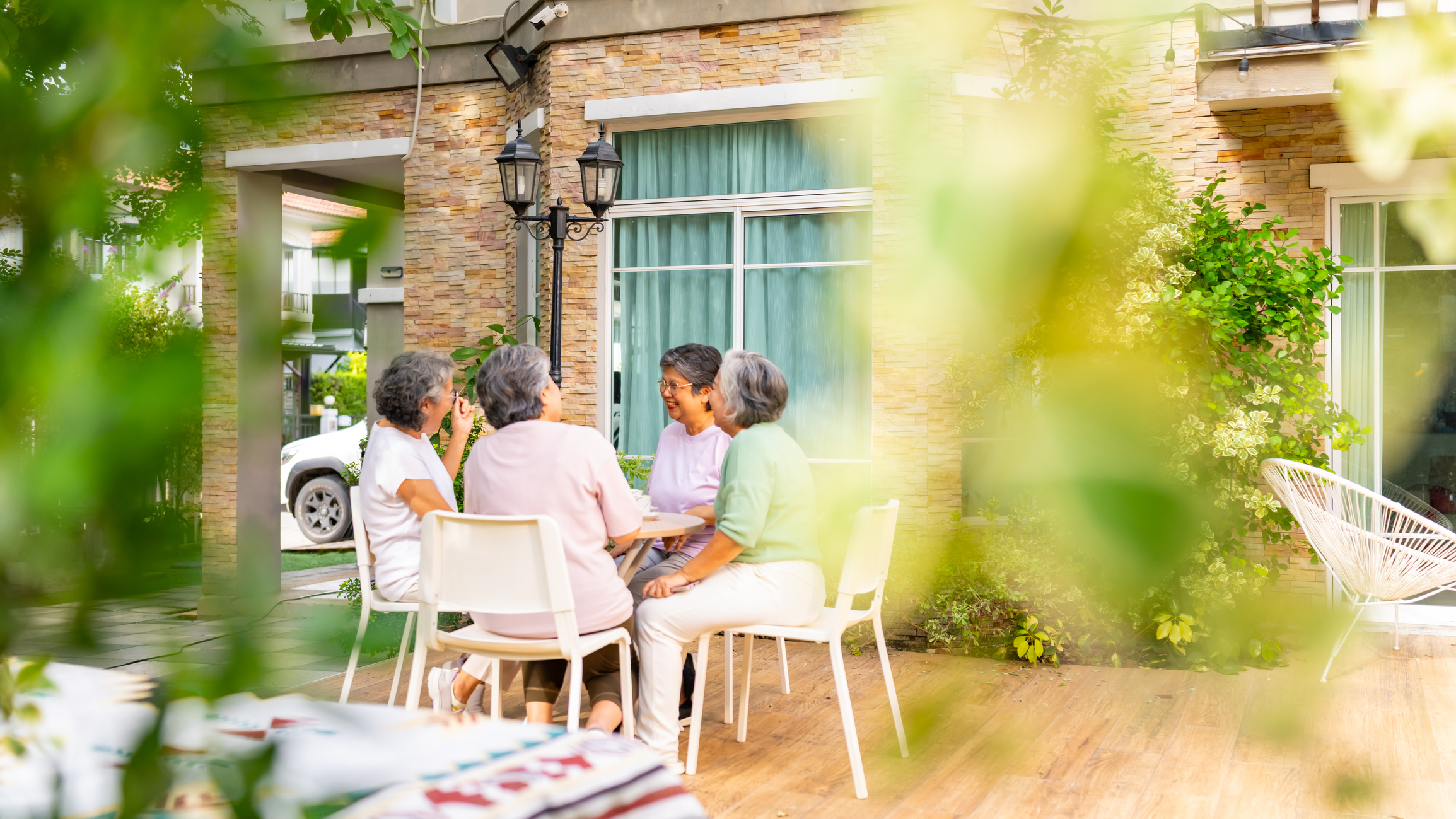
For older Americans, senior living communities serve an important role. They help provide care and connection when folks need it most.
“Change” can be a scary word when you rely on routine. The move from “home” to a new living space is often a challenge for new residents (and their families). For older adults moving into an unfamiliar place, one way senior care facilities can ease the transition is by greeting them with a pleasant-smelling environment.
A setting that smells good is also beneficial for those who work there. Certain fragrances can help with employee stress reduction, retention, and productivity. Or all of the above!
Assisted living facilities can benefit from professional scent marketing in a number of ways. Its ability to make a space feel fresh, comfortable, and welcoming—for residents and visitors—makes scent marketing a smart choice.
Learn more about The Science of Scent in Healthcare: Benefits for Patients and Staff.
What Families Notice During a Senior Living Tour

Families looking at senior care options can get a feel for the facility by taking a tour. From the entrance to the hallways to the cafeteria, a guided tour lets them take it all in. Rather than a single “first impression,” it’s more like a series of impressions that create an overall perception.
Entrances and Lobbies Set the Tone
Each family’s journey begins at the entrance. That means your lobby will set the tone for their entire visit. Is it ready?
To answer that question, it helps to consider how families are feeling as they walk in:
- They’re nervous
- They’re uncertain
- Some may be skeptical
- Others may be hopeful
- Some are all of the above
Deploying a light, inviting fragrance is ideal in this situation. A scent known to soothe stress and ease tension, such as lavender, would be a good choice.
Hallways and Common Areas Reveal Everyday Life
As families move beyond the lobby, they encounter their first taste of day-to-day living for residents. They begin to envision what life for their loved one might look like in this setting.
Their senses are on high alert. What they see and smell in hallways, elevators, and common areas tells them a lot about the facility and how it’s run.
They might catch a whiff of not-so-pleasant smells from resident rooms or restrooms, and that’s understandable. Deploying a consistent, subtle aroma can provide balance by smoothing out any rough edges.
Dining, Activities, and Shared Spaces Create Competing Aromas
Families appreciate seeing and smelling a well-run cafe—they want their loved one to eat healthily and heartily. They also love seeing residents participating in activities and experiencing that “sense of community” promised in the brochure in action.
But any area with food smells can be tricky to manage. Something that smelled great for breakfast might not smell so great by lunch, and that odor may linger longer than you’d like. And your Activity Room full of 10 seniors will inevitably carry the mix of aromas each brings with them.
At different times, in different spaces, your building will carry all sorts of smells. As the manager or director, it’s important to acknowledge those realities while also providing a consistent, professionally presented tour. Scent marketing can help you strike that balance.
Discover Why Your Business Smells Different at Different Times of Day.
Odor Control Must Come Before Scent Marketing
Odor control comes before olfactory branding; it’s an important part of a holistic scent marketing strategy. That’s because there’s an important difference between masking odors and eliminating them.
When something stinks, resist the urge to cover it up with scent. Instead, find where it’s coming from and root it out at the source. Here are the usual suspects for lingering odor:
- Bathrooms
- Trash rooms
- Pet waste
- Moisture in excess
- Floor drains
- Garages
- Dirty coffee filters
- Laundry rooms
The scent of urine and feces WILL happen. It’s reality, and there’s no hiding from that in an elderly care setting. Effective odor control is based on acknowledging malodors and neutralizing them at their source.
Scent marketing is the second punch in that 1-2 combo. It builds on the good work done by odor control and uses that fresh foundation to enhance the environment through fragrance. It’s a long-term solution to creating a balanced scentscape.
A Senior Living Community Should Smell Like A Home—Not A Fragrance Display

One of the keys to scent marketing is subtlety. Add too much fragrance, and it could be counterproductive.
Learn more about the role subtlety plays in Subtle Scent Marketing: Best Business Fragrances Shouldn’t Feel Overpowering.
As you consider scent intensity, remember the goal: to supplement your already-comfortable setting with a scent that feels pleasant and inviting AND stays true to your brand.
There are two schools of thought here. One is to create a signature scent that is specific to your brand. Brands like Nike and Abercrombie & Fitch have had great success with this. The other is to choose from a library of ready-made scents.
Both methods are strong options for companies that invest in scent-marketing services. Unsure which way to go? Scan the Aire-Master scent list for ideas.
Residents, Employees, and Visitors May Experience Scent Differently
This is the right time for a reminder: everyone experiences fragrance a little differently.
What smells pleasant to one person might be off-putting to another. Health, memories, and intensity have a big influence, as does personal preference. (Coffee is a great example: some love the smell, and some can’t stand it!)
Age is a factor. Consider these stats from the National Institute on Deafness and Other Communication Disorders, which illustrate how variable the sense can be.
- 1 person in 8 has some smell loss
- 1 person in 30 has very little or no sense of smell
- 1 person in 15 smells phantom odors
Older people are more likely to experience loss of smell, and the percentage goes up with age:
- 40–49: 4% of people have smell loss
- 50–59: 11%
- 60–69: 13%
- 70–79: 25%
- 80 and up: 39%
This suggests the scent MAY need to be stronger to be effective. But that’s only part of the story. The residents may be older, but staff, visitors, and family may skew younger. And your scent marketing efforts should be directed at the entire audience.
Balance and subtlety are your guiding lights here. Need help with the nuances? This might be a good time to bring in a professional scent marketing partner.
Explore the idea of “nose blindness” in the blog Nose Blindness at Work: Why You Stop Smelling Your Business.
What to Look for in a Senior Living Scent Partner

As you consider scent marketing and research possible partners, think about these questions:
- Does your potential scent partner have experience with your type of business?
- Do they support a 1-2 punch featuring odor control and scent marketing?
- Do they understand that your facility is a community full of people who deserve care and respect?
- Do they comprehend the nuances of airflow in different rooms/spaces?
- Do they feature a customizable program specifically for your business?
- Do they offer equipment and supplies?
- Do they provide maintenance services so you can focus on other duties?
The scent marketing pros at Aire-Master can answer “yes” to all these questions. They’ve been helping customers of all kinds with scent solutions since 1958. And they’re ready to help you with:
- Equipment installation
- Fragrance replenishment
- Maintenance schedule
Browse our full scope of services here.
FAQs about Senior Living Scent Marketing
Can scent marketing eliminate odors in a senior-living community?
Scent marketing should not be used to cover unresolved odors. Odor control focuses on neutralizing or eliminating unwanted smells, while scent marketing adds an intentional background fragrance to support the environment. Effective programs address odor sources first and fragrance second.
What fragrances work best in senior living?
There is no single fragrance that works for every community. The appropriate choice depends on the community’s identity, residents, building, existing aromas, and desired atmosphere. Light fresh, citrus, tea, soft floral, woody, or gently welcoming profiles may be considered, but the fragrance should remain subtle and appropriate for the setting.
What if some residents have a reduced sense of smell?
Smell sensitivity varies among older adults. Some residents may notice less fragrance, while others may perceive it normally or be especially sensitive. Reduced perception among some residents is not a reason to increase intensity. The environment must also remain comfortable for employees, families, and visitors.
Can scent marketing help senior-living tours?
Scent can support a tour by contributing to an environment that feels fresh, comfortable, and welcoming. It cannot replace quality care, engaged staff, good programming, or a well-maintained building, but it can help the physical experience align with the community’s marketing message.
How strong should a senior-living fragrance be?
In most cases, a background fragrance should be subtle rather than immediately obvious. The correct intensity depends on the space, airflow, occupancy, fragrance, and audience. Professional evaluation and ongoing service can help maintain an appropriate balance.
Make the In-Person Experience Match the Marketing Promise
 Caring for aging parents or grandparents can be stressful. Families face many worries. One of the biggest is finding a safe, caring place for them in an independent or assisted living facility.
Your senior living residence looks great online and in brochures. It could be the perfect solution for them. But will it “show and smell” as well as it should when they come in for a tour?
Let the experts at Aire-Master help you make sure it does.